

From Beach to Big Bags
International partnership project establishing end-to-end value chain to stop marine plastic waste pollution and turning it into new products
A project funded by

Making a difference
By June 2026 the project will have achieved
kilo...
…of PP plastic waste from the Buckingham Canal and coast-near streets of Chennai recycled into new, durable big bags for the industry.
(informal) waste pickers...
…among them women, provided with health insurance, higher income as well as training and safety equipment to handle the plastic waste.
meters...
…of trash barrier installed in Buckingham Canal, Chennai, to stop plastic waste before it leaks into the ocean.
What's new in the project?
Project updates
From Beach to Big Bags: OBP certificering
From Beach to Big Bags-projektet (FBBB) har nået en vigtig milepæl i arbejdet med at opbygge transparente og ansvarlige værdikæder for ocean-bound plastic. Projektets indsamlings- og sporbarhedsprocesser er nu certificeret under Ocean Bound Plastic (OBP)-standarden...

Træning i gang i Chennai som del af projektet From Beach to Big Bags
Træning af lokal arbejdskraft er i øjeblikket i gang i Chennai, Indien, som en del af projektet From Beach to Big Bags. Sammen med lokale partnere arbejder projektet for at styrke mere sikre og transparente affaldshåndteringspraksisser, samtidig med at det...
Første link i kæden: Lokale affaldsindsamlere
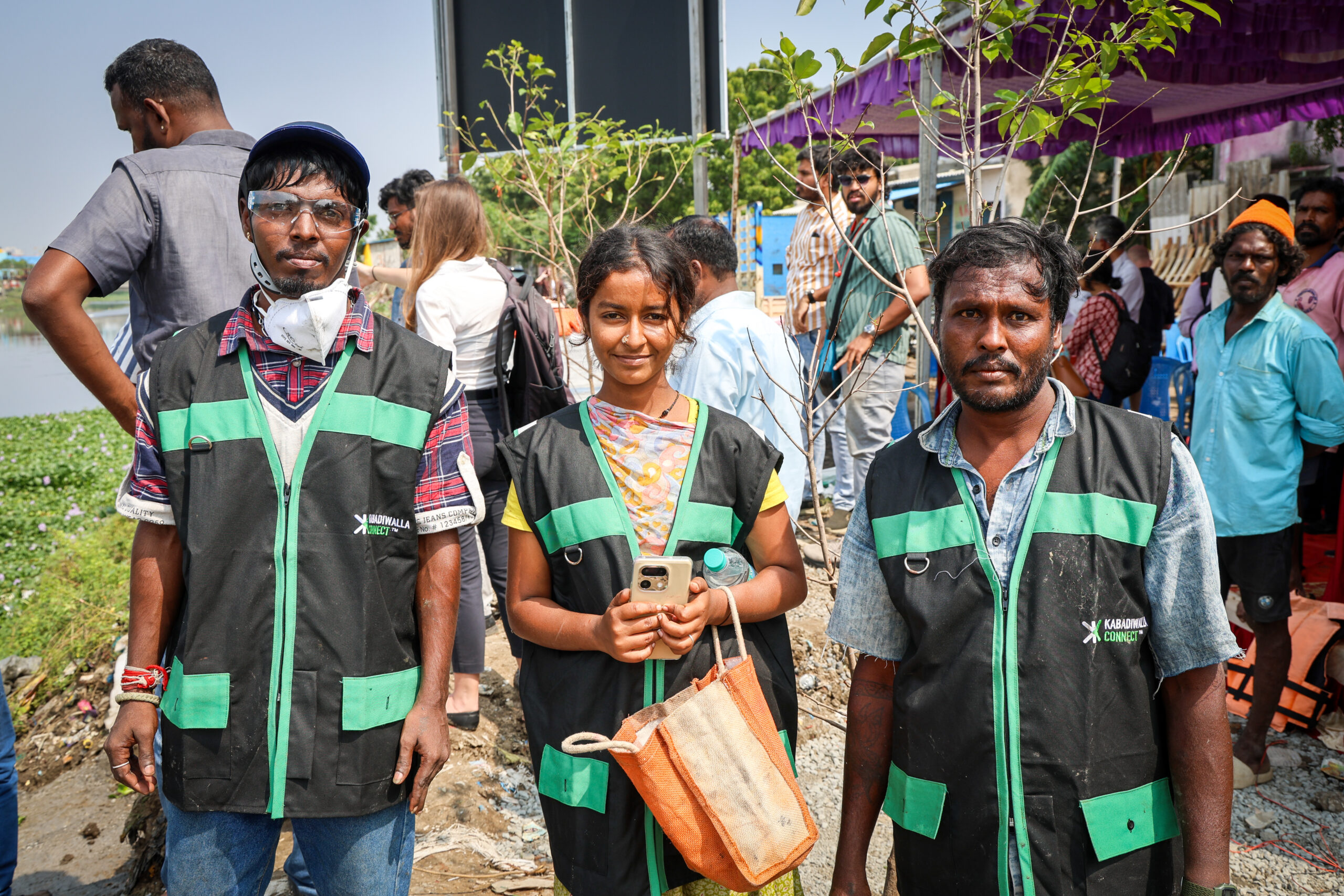
I Chennai begynder værdikæden i From Beach to Big Bag (FBBB)-projektet med de mennesker, der i praksis gør plastgenanvendelse mulig: de lokale affaldsindsamlere. I samarbejde med vores scrapshop-partner Sri Nattar Devi Waste Paper Mart spiller de deltagende...
creating a value chain
From waste to big bags: The value chain
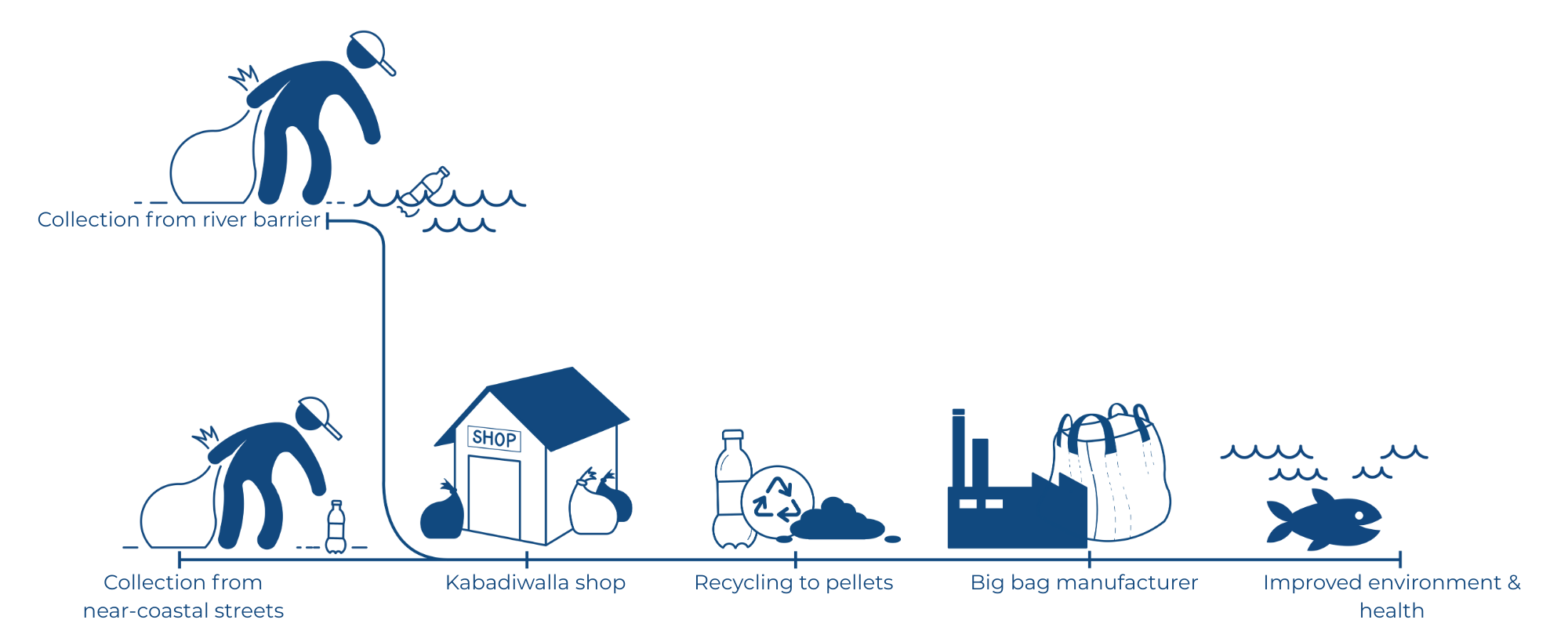
The project establishes the full value chain: From collection and sorting to recycling and manufacturing of big bags, to be certified under OBP Social+
The From Beach to Big Bags Project
Introducing a solution
When “waste” is given value and a clear infrastructure to collect and recycle it, such as an end-to-end value-chain, plastic waste pollution can be combated and instead turned into livelihoods and a greener economy.
The From Beach to Big Bags project aims to create such a condition: a transparent, certified, value-chain on the collection, recycling and product-making from ocean-bound plastic that also uplifts informal waste pickers – creating a more sustainable and ethic value-chain for the production of Big Bags while reducing damage to the environment.
Introducing the barrier
A floating barrier to collect river plastic
A semi-permanent barrier is installed in Buckingham Canal to stop the plastic waste thrown, or by other means ended up, in the river from reaching. The barrier will reach ~50 cm under the surface – capturing plastic floating deeper while allowing marine life to pass by unhindered.
The waste is collected by local, trained, waste pickers and sorted on site. The recyclables are sent to one of our partner scrap shops (kabadiwalla) and the non-organic non-recyclables are sent to the nearby landfill.
The barrier will be monitored daily for waste volumes and the collection team alerted when waste has gathered – this allows us to operate flexible across both dry and rainy seasons so that waste doesn’t pile up and cause health and smell concerns.
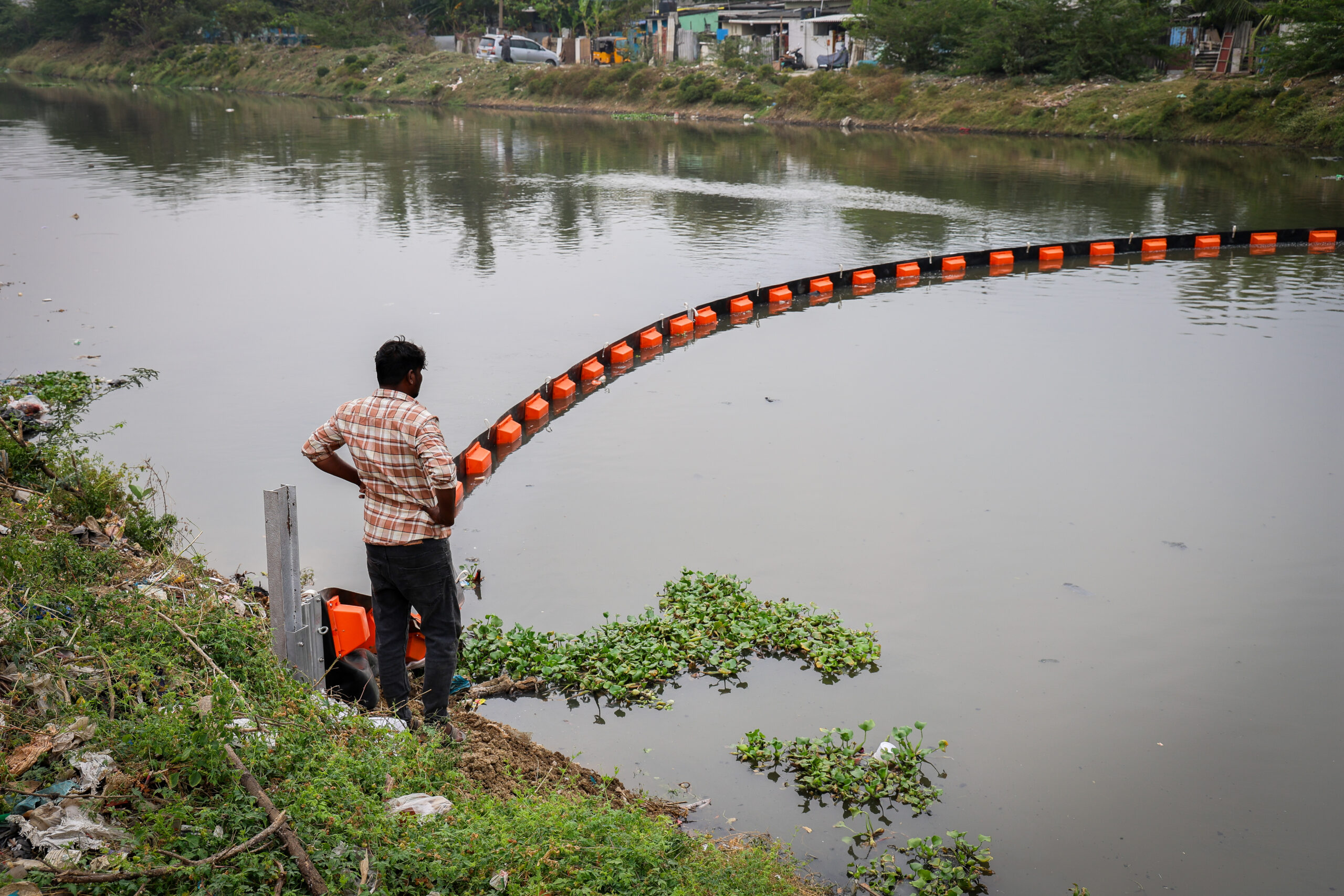
Floating trash barrier, Buckingham Canal, Chennai. Day 1.
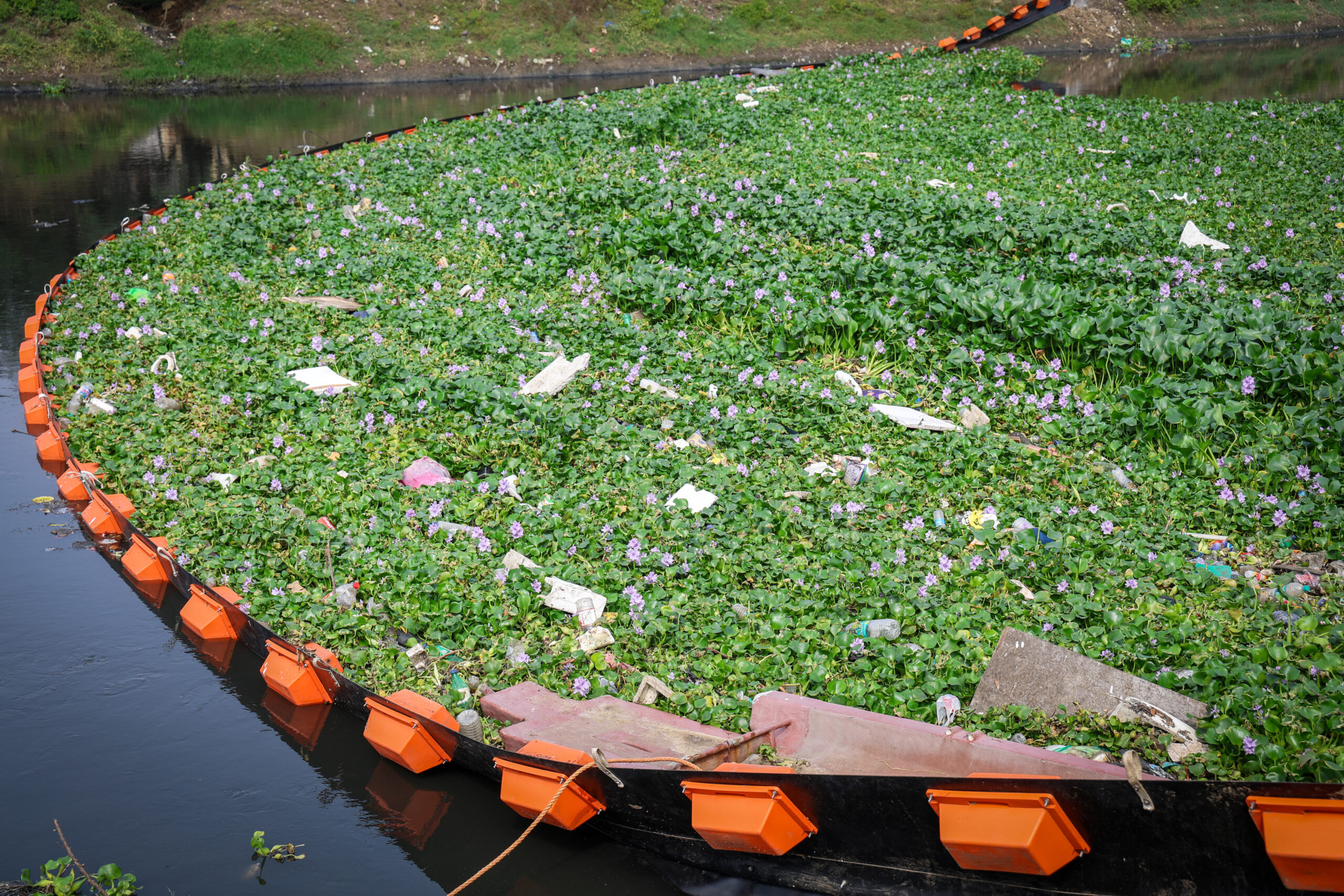
Floating trash barrier, Buckingham Canal, Chennai. Day 4 after installment.
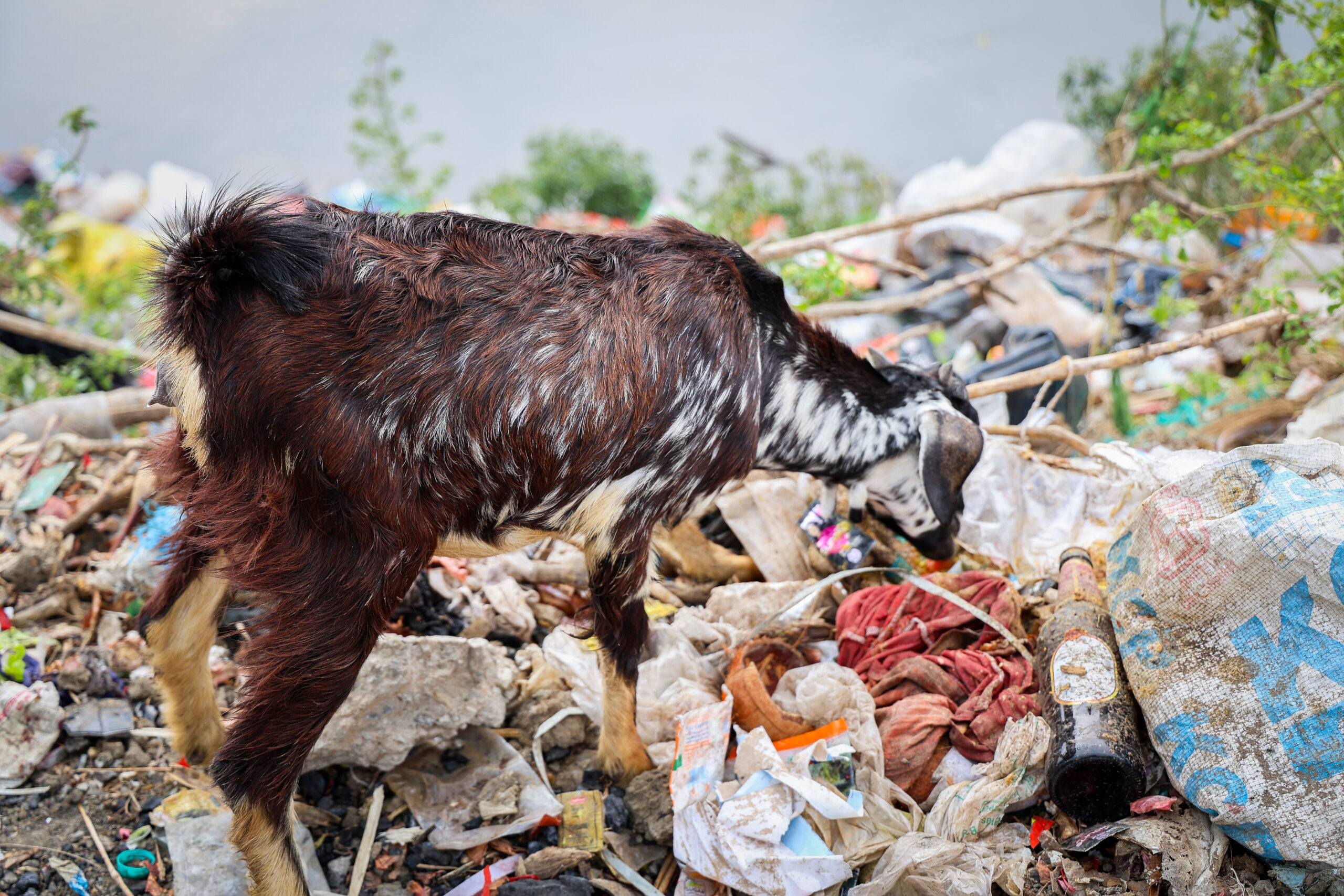
Buckingham Canal, Chennai, India. ©Ocean Plastic Forum
Why plastic waste is a problem
There is no "away"
Plastic doesn’t simply “dissapear” like other organic material when thrown in rivers. Plastic can last for several hundred years and when thrown in rivers it instead travels downstream and into the ocean where it harms the marine life and later us. This is because many marine life and birds eat the plastic and gets sick or starves – or we end up eating fish with plastic in its body – making us sick from the chemicals in the plastic.
The FBBB Value chain
Learn more about each step and the people involved in the project value-chain
Step 1
Waste pickers
Read more
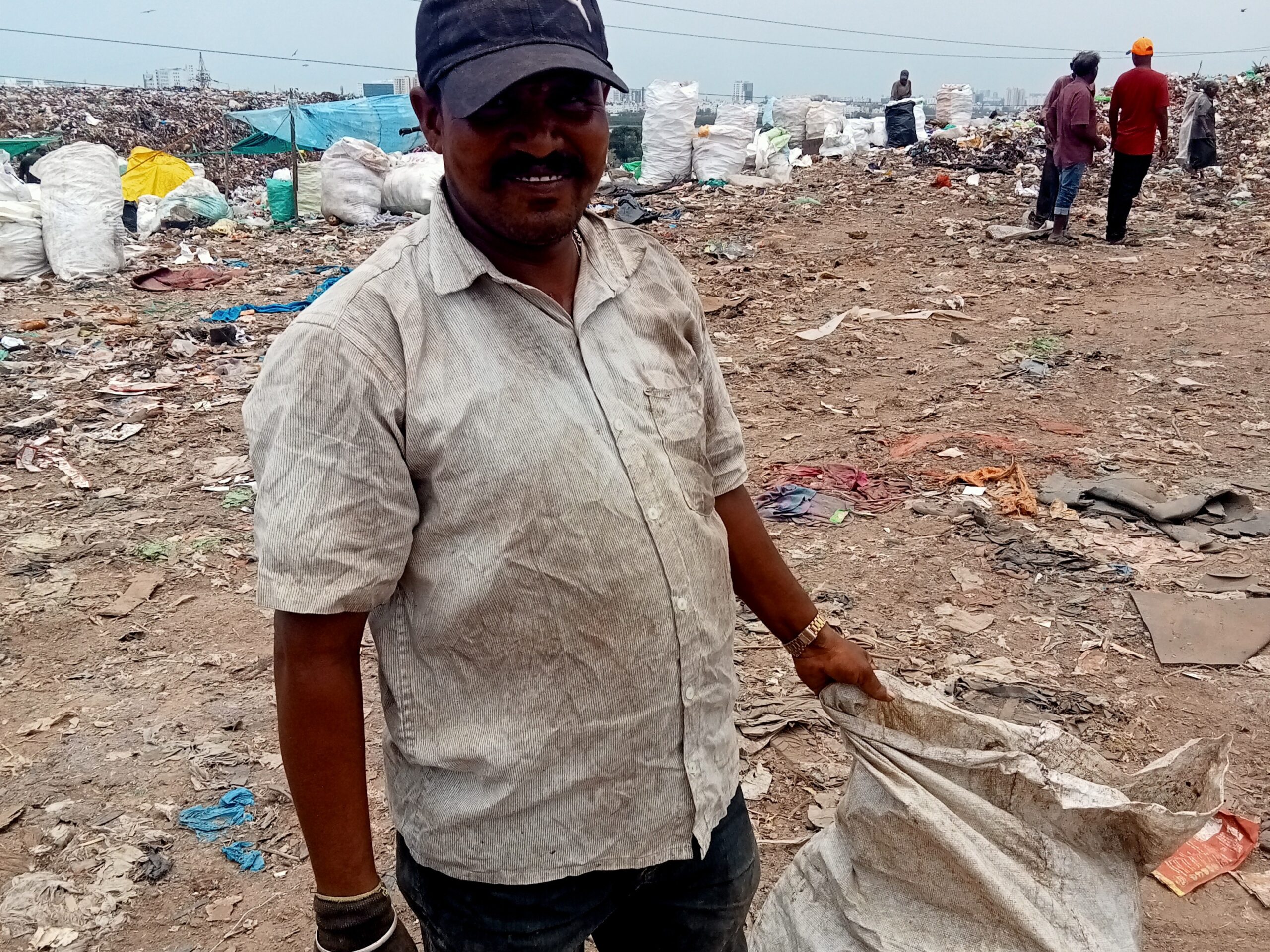
Local waste pickers collect waste from near-coastal streets, waste bins and households. In the FBBB project, selected and trained waste pickers will also manage and collect waste from the floating river barrier. Each waste picker has learned which types of waste have value, and do the first rough sorting of the waste before delivering to scrap shops.
Step 2
Kabadiwallas (scrap shops)
Read more
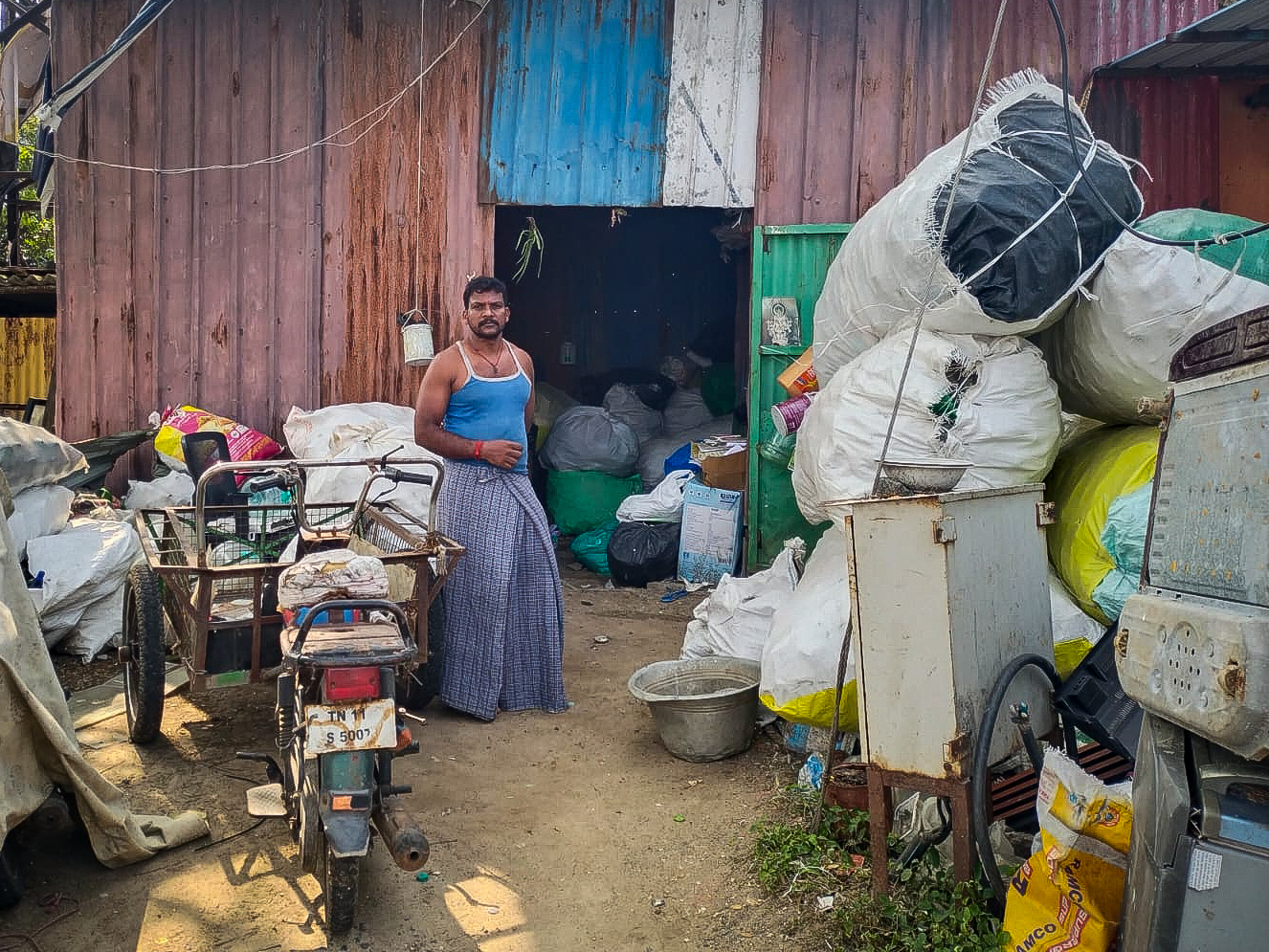
Kabadiwallas, or small scrap shops, buys, stores and segregates the recyclable materials that the waste pickers deliver to them. They do minimal or no processing other than segregation of the material before selling it onwards for bailing and later recycling. There are typically many such Kabadiwallas in a single city. Click below to meet one of the Kabadiwallas we are partnering with in the project.
Step 3
Recycler
Read more
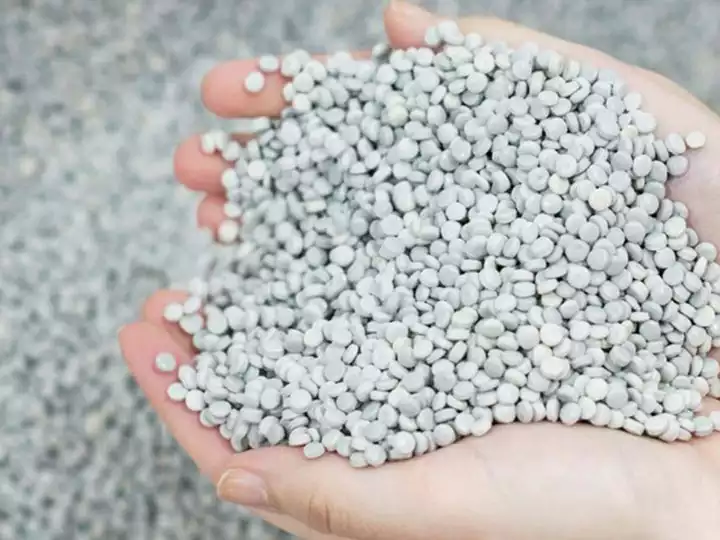
The recycler is a crucial step in the value chain as they are the ones that turn the plastic waste into new “building blocks” for making new products. The plastic waste is first shredded and washed, and then sent through a process to form small pellets that are universially used by plastic product makers. The recyclers must ensure quality and specifications are matching the needs of the manufacturer. When such pellets are from recycled materials they usually get an “r” in the beginning, example: rPP.
Step 4
Manufacturer of Big Bags
Read more
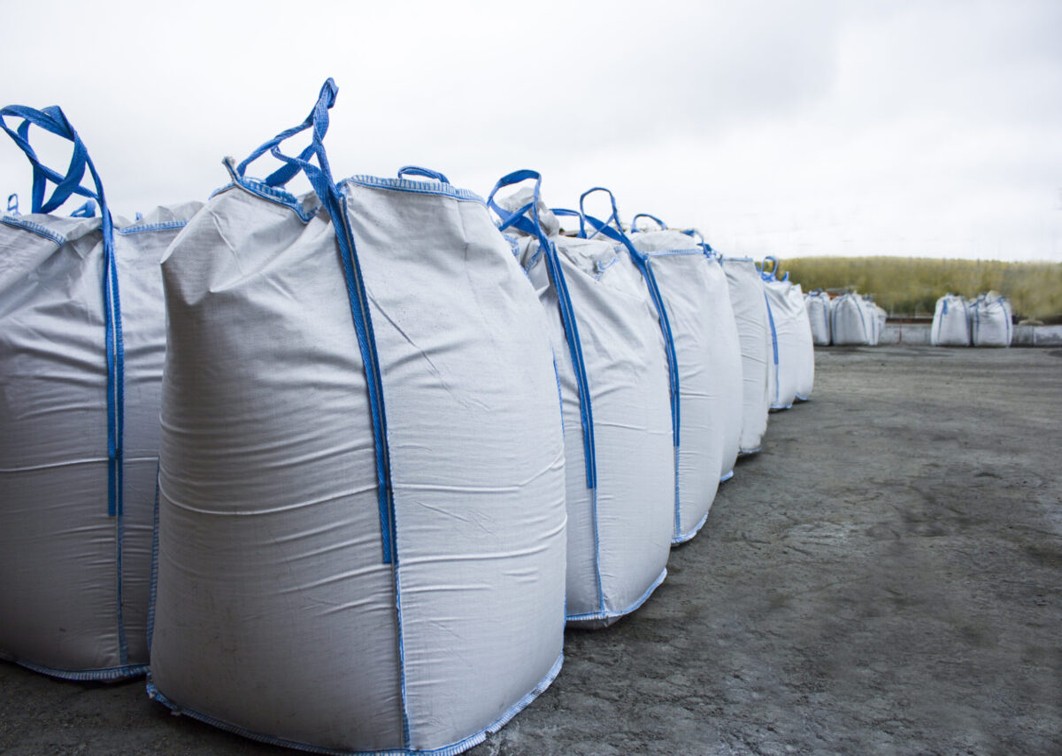
The rPP pellets are incorporated in Gleco’s manufacturer’s Big Bag production process. The final product will be Big Bags that include 30% Ocean Bound rPP from the streets and canal of Chennai.
The FBBB Value chain
Learn more about each step and the people involved in the project value-chain
Step 1
Waste pickers
Read more
Local waste pickers collect waste from near-coastal streets, waste bins and households. In the FBBB project, selected and trained waste pickers will also manage and collect waste from the floating river barrier. Each waste picker has learned which types of waste have value, and do the first rough sorting of the waste before delivering to scrap shops.
Step 2
Kabadiwallas (scrap shops)
Read more
Kabadiwallas, or small scrap shops, buys, stores and segregates the recyclable materials that the waste pickers deliver to them. They do minimal or no processing other than segregation of the material before selling it onwards for bailing and later recycling. There are typically many such Kabadiwallas in a single city. Click below to meet one of the Kabadiwallas we are partnering with in the project.
Step 3
Recycler
Read more
The recycler is a crucial step in the value chain as they are the ones that turn the plastic waste into new “building blocks” for making new products. The plastic waste is first shredded and washed, and then sent through a process to form small pellets that are universially used by plastic product makers. The recyclers must ensure quality and specifications are matching the needs of the manufacturer. When such pellets are from recycled materials they usually get an “r” in the beginning, example: rPP.
Step 4
Manufacturer of Big Bags
Read more
The rPP pellets are incorporated in Gleco’s manufacturer’s Big Bag production process. The final product will be Big Bags that include 30% Ocean Bound rPP from the streets and canal of Chennai.
Project partners


Funding