The From Beach to Big Bags Project
Reducing marine plastic pollution by building a value-chain for recycling
To combat the growing plastic waste that ends up in the ocean, this project is building a full value-chain from collection to final product making using recycled plastic. By both giving value to the plastic waste and building and connecting the partners of the value chain we provide a business case for reducing plastic waste pollution.
In this project we focus on the transformation of PP plastic waste into new Big Bags, using two collection methods; Collection by waste pickers along near-coastal streets and by installing and operating a trash barrier – thus getting the plastic back into the economy before it enters the ocean, and where it is cheaper to collect and of better quality.
To do this we have an agreement with a total of 40 local informal waste pickers and 5 scrap shops to sell us their PP collected from coastal/near-coastal streets, and from our installed barrier. Each informal waste picker will be provided health insurance and a 10% higher price per kg for the PP they sell to our project – supporting better livelihoods for the waste pickers.
The 5 scrap shops will manage daily transactions and sending the plastic waste to our chosen recycler, who pelletizes it to the specifications needed by the Big Bag producer. The Big Bag producer have set a target that 30% of the final bag is made from the recycled PP (rPP) pellets. The Big Bags, still living up to their rigorous quality needs, are then sold back into the market and supporting the circular economy.
creating a value chain
From waste to big bags: The value chain
The project establishes the full value chain: From collection and sorting to recycling and manufacturing of big bags, to be certified under OBP Social+
Introducing the barrier
A floating barrier to collect river plastic
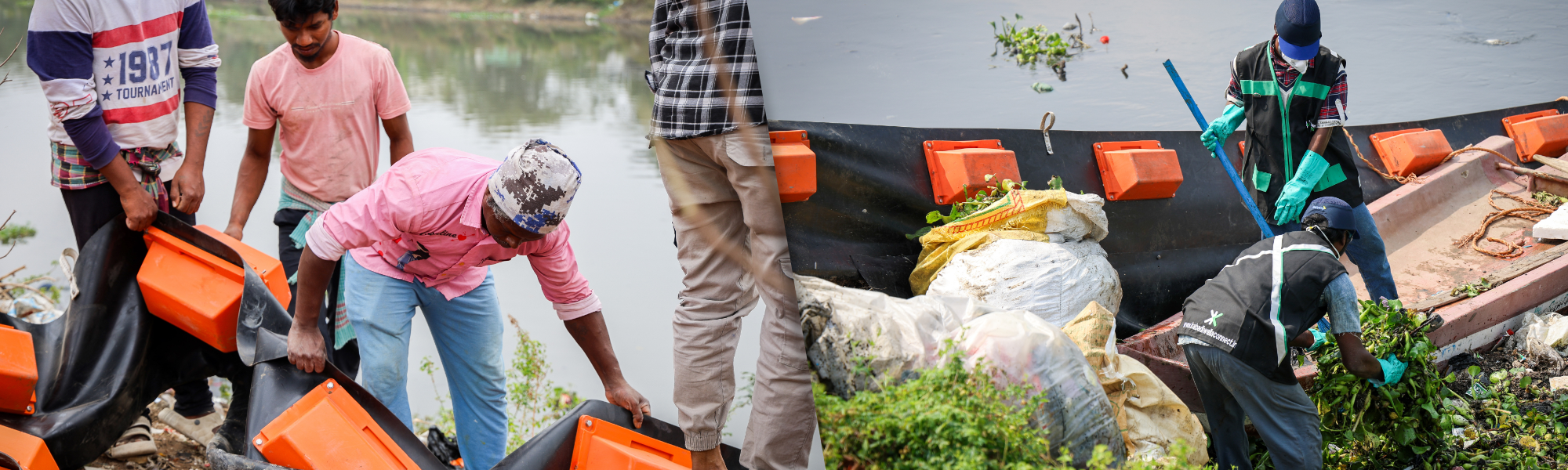
A semi-permanent barrier is installed in Buckingham Canal to stop the plastic waste thrown, or by other means ended up, in the river from reaching. The barrier will reach ~50 cm under the surface – capturing plastic floating deeper while allowing marine life to pass by unhindered.
The waste is collected by local, trained, waste pickers and sorted on site. The recyclables are sent to one of our partner scrap shops (kabadiwalla) and the non-organic non-recyclables are sent to the nearby landfill.
The barrier will be monitored daily for waste volumes and the collection team alerted when waste has gathered – this allows us to operate flexible across both dry and rainy seasons so that waste doesn’t pile up and cause health and smell concerns.
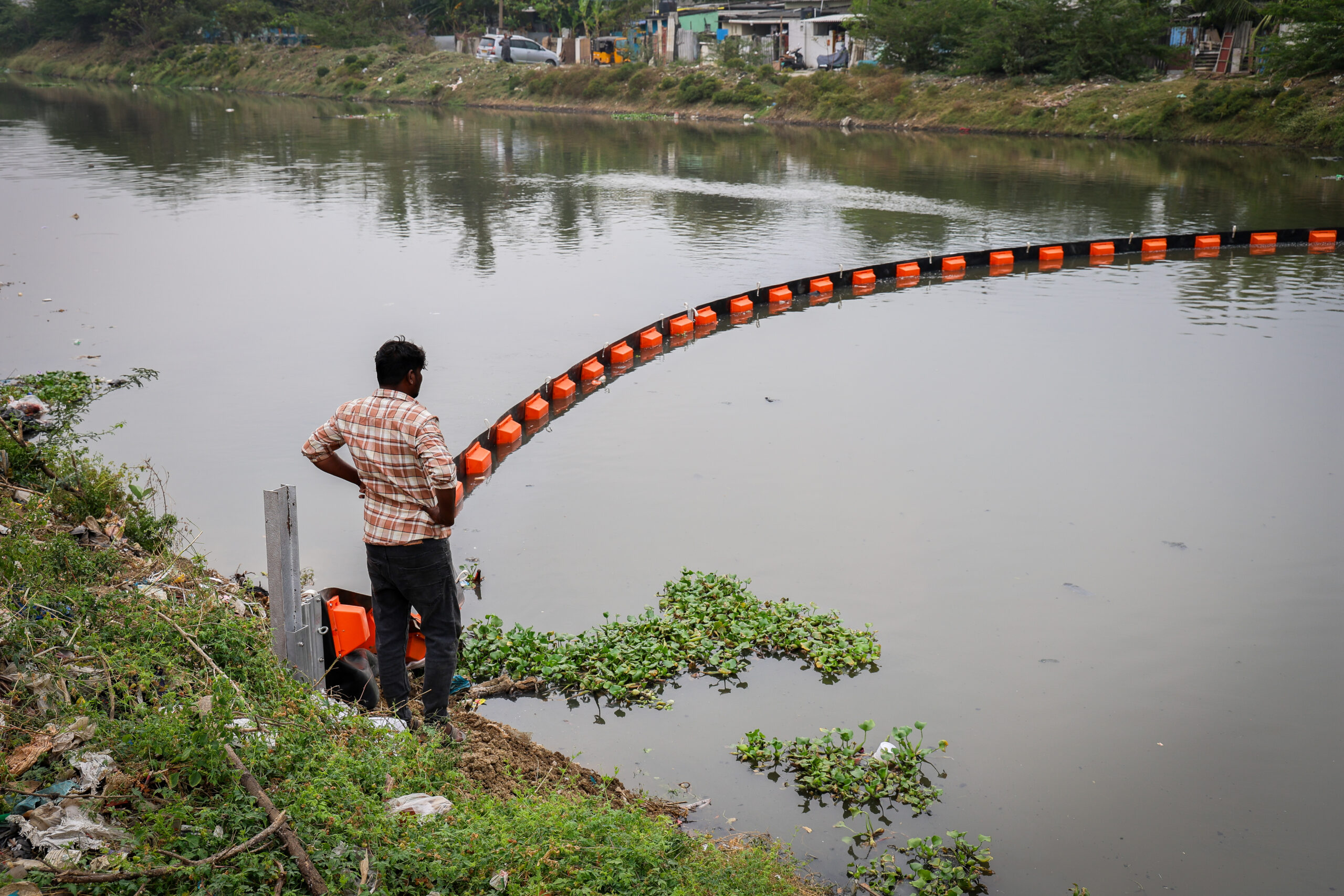
Floating trash barrier, Buckingham Canal, Chennai. Day 1.
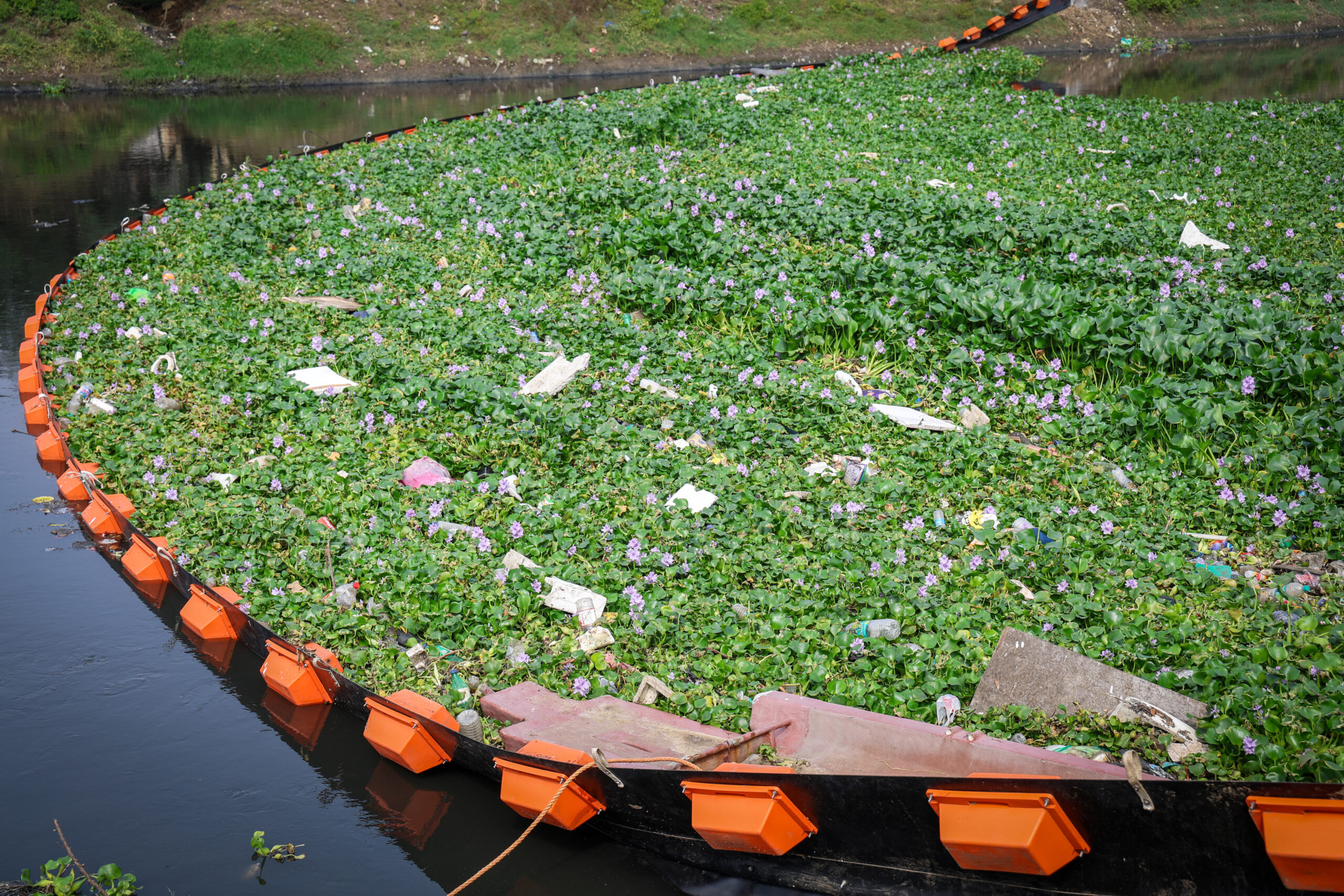
Floating trash barrier, Buckingham Canal, Chennai. Day 4 after installment.
The FBBB Value chain
Learn more about each step and the people involved in the project value-chain
Step 1
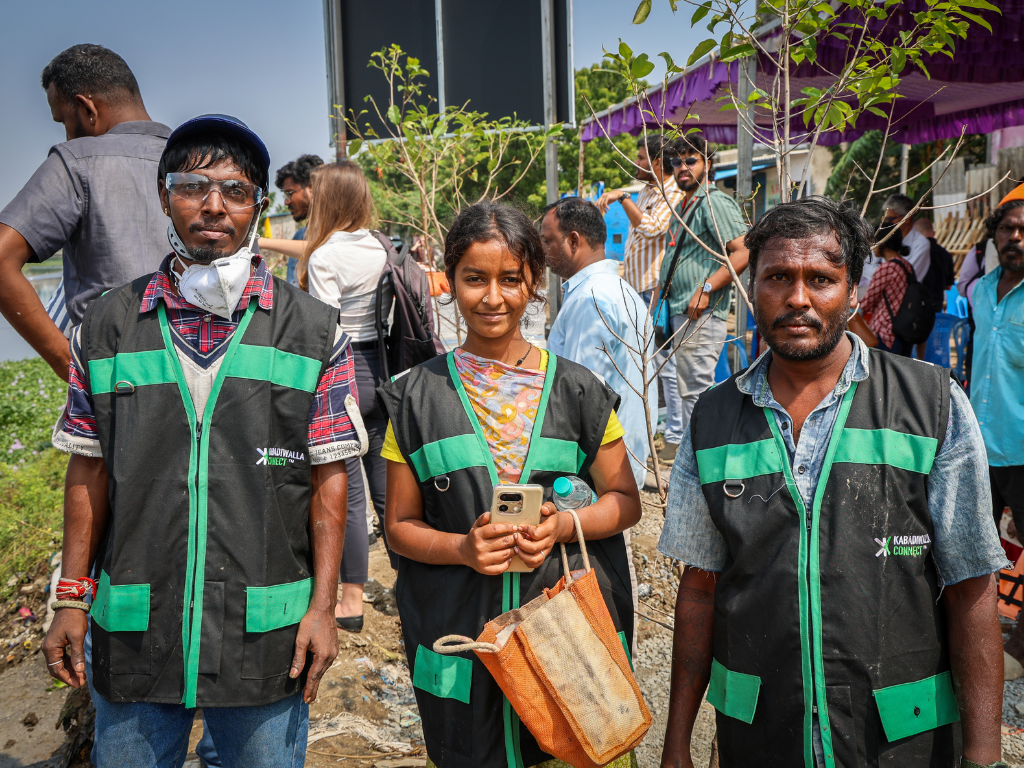
Waste pickers
Read more
Local waste pickers collect waste from near-coastal streets, waste bins and households. In the FBBB project, selected and trained waste pickers will also manage and collect waste from the floating river barrier. Each waste picker has learned which types of waste have value, and do the first rough sorting of the waste before delivering to scrap shops.
Step 2
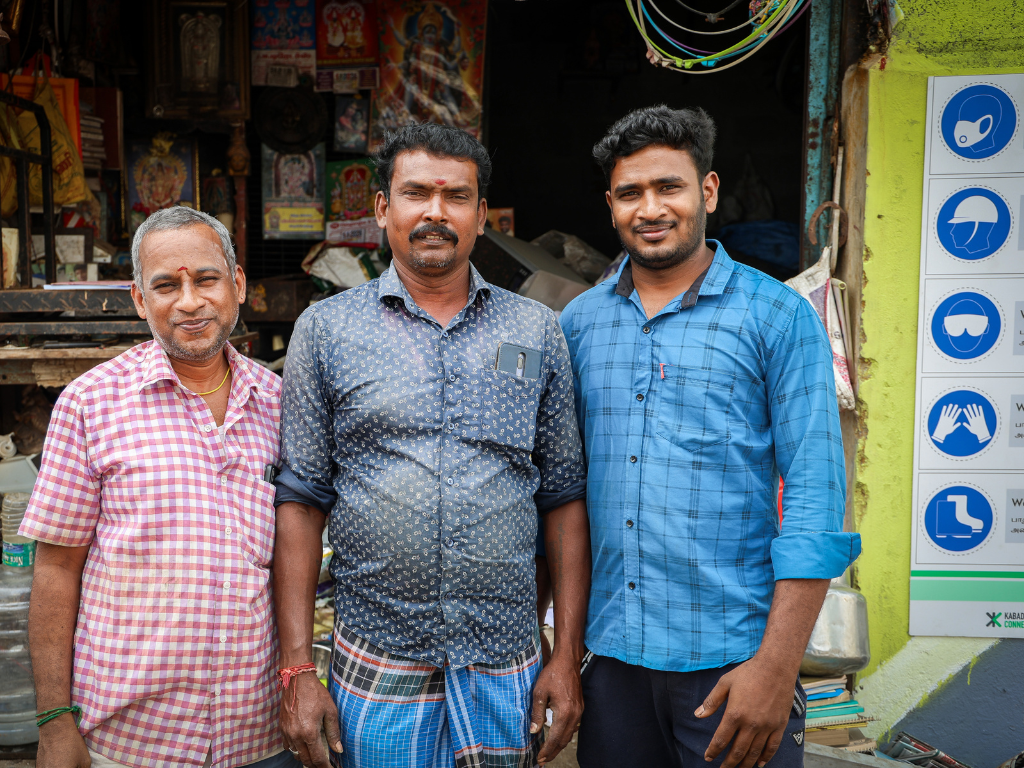
Kabadiwallas (scrap shops)
Read more
Kabadiwallas, or small scrap shops, buys, stores and segregates the recyclable materials that the waste pickers deliver to them. They do minimal or no processing other than segregation of the material before selling it onwards for bailing and later recycling. There are typically many such Kabadiwallas in a single city. Click below to meet one of the Kabadiwallas we are partnering with in the project.
Step 3
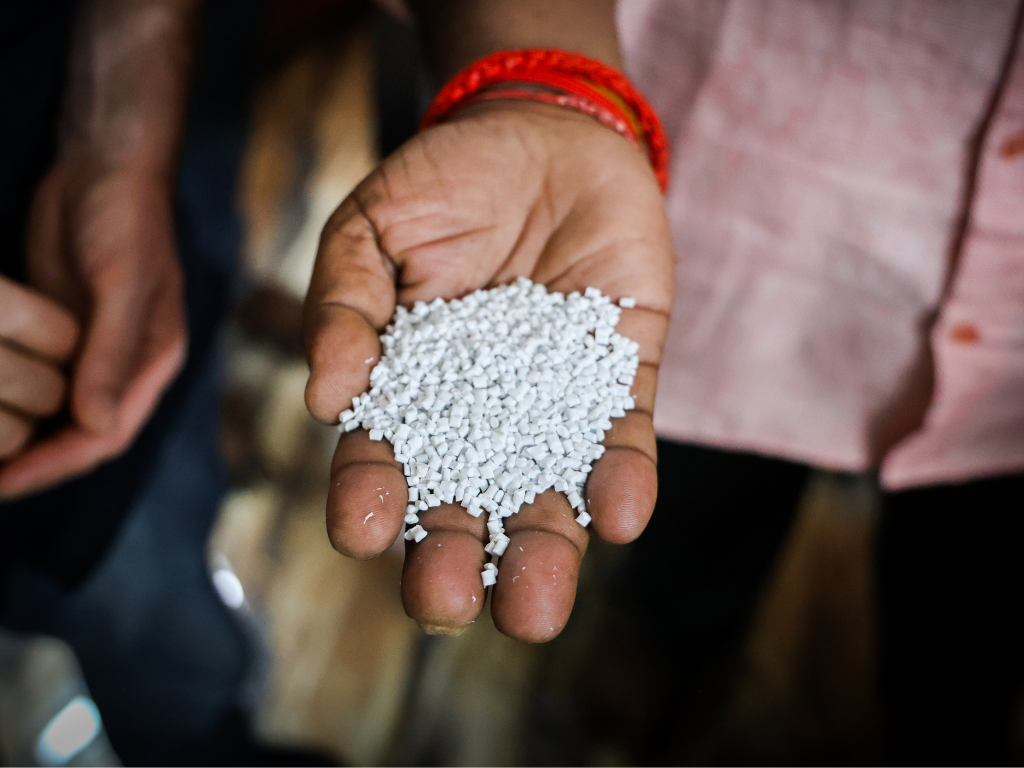
Recycler
Read more
The recycler is a crucial step in the value chain as they are the ones that turn the plastic waste into new “building blocks” for making new products. The plastic waste is first shredded and washed, and then sent through a process to form small pellets that are universially used by plastic product makers. The recyclers must ensure quality and specifications are matching the needs of the manufacturer. When such pellets are from recycled materials they usually get an “r” in the beginning, example: rPP.
Step 4
Manufacturer of Big Bags
Read more
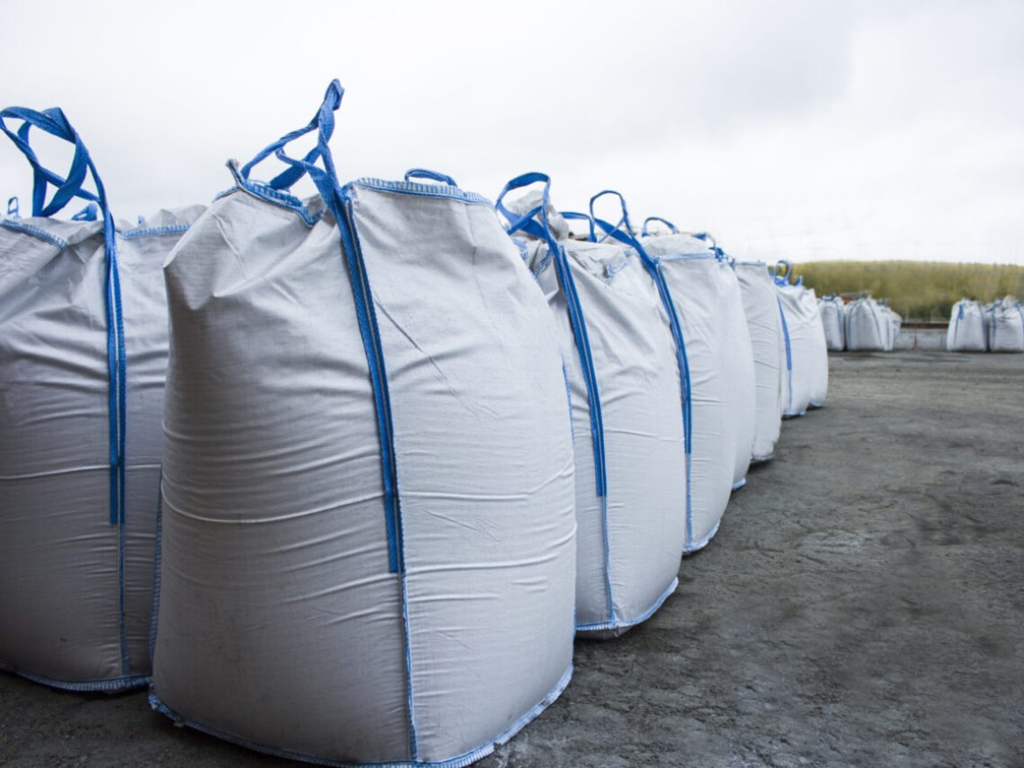
The rPP pellets are incorporated in Gleco’s manufacturer’s Big Bag production process. The final product will be Big Bags that include 30% Ocean Bound rPP from the streets and canal of Chennai.
Transparency and documentation
Certification makes the difference
In the project, we work closely with the end users and industry to ensure full transparency and compliance in the value chain, through documentation and regular audits at each step and for each process.
Therefore, the project will be certified under Zero Plastic Ocean’s Social+ Ocean-Bound Program (OBP). This certification combines the attention to removing ocean-bound plastic from the environment with socially just practices. By building in transparency and certification as part of the value-chain, the project can trustworthily document where the plastic comes from, and the conditions of the workers who recovered it.