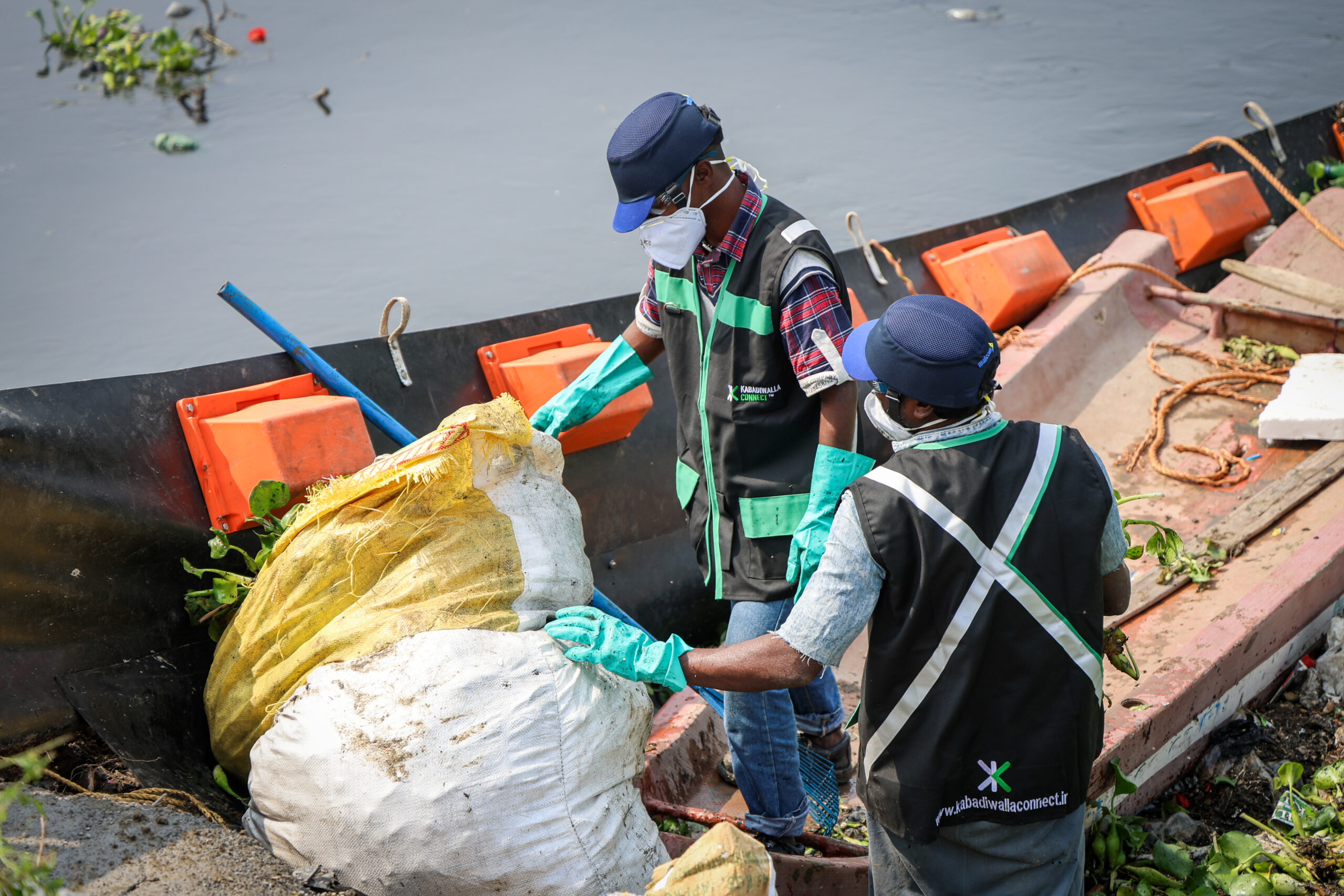
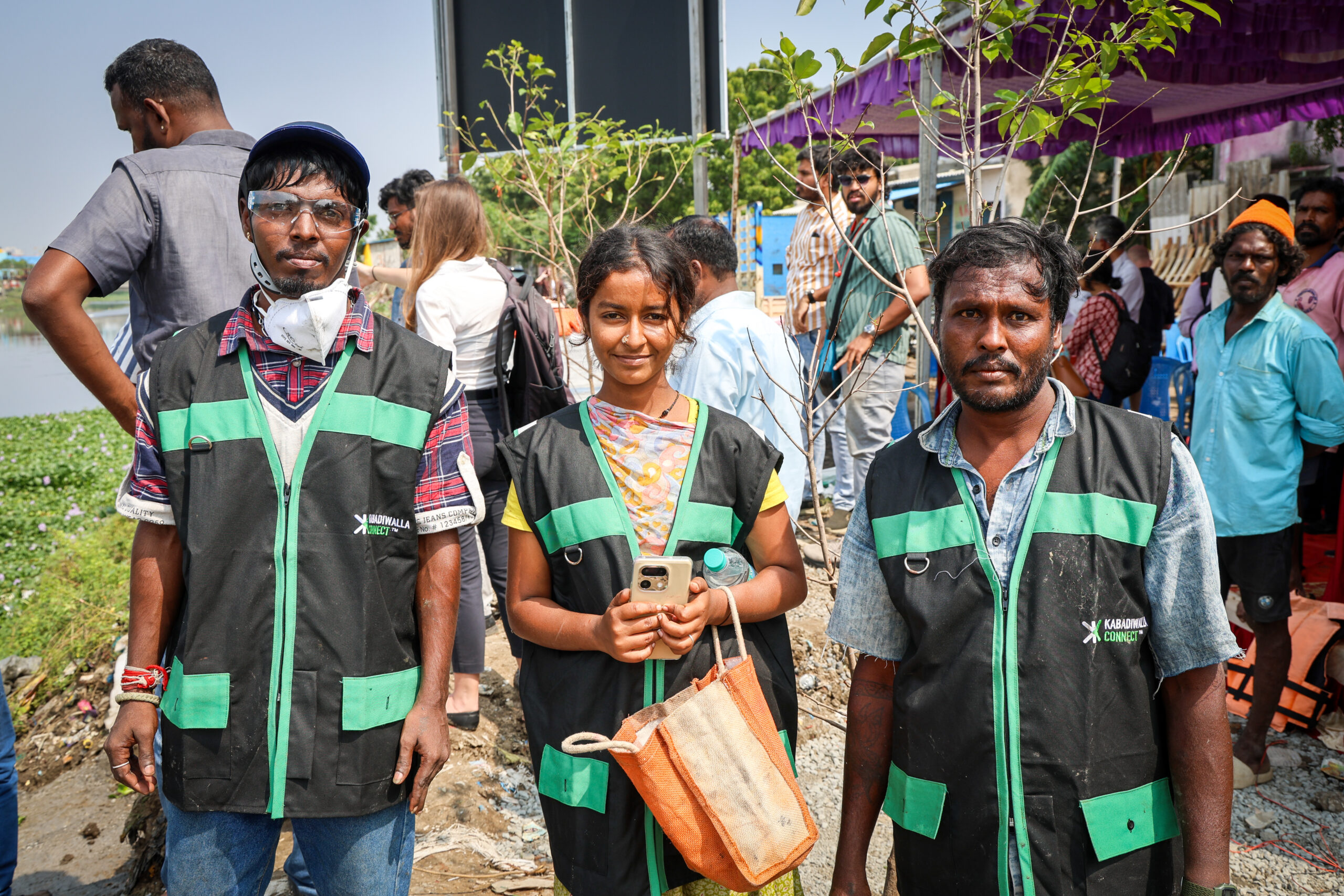
In Chennai, the From Beach to Big Bag (FBBB) value chain begins with the people who make plastic recovery possible in practice: local waste pickers.
Working in collaboration with our scrap-shop partner Sri Nattar Devi Waste Paper Mart, the participating waste pickers play a crucial role in the project. After the floating barrier in Buckingham Canal captures plastic and other waste before it reaches the ocean, it is the waste pickers who empty the barrier, sort the material, and ensure that valuable resources stay within the recycling system.
For many, this work is physically demanding and often insecure. Income can fluctuate, working conditions can be difficult, and access to healthcare and protective equipment has historically been limited. Our partner Kabadiwalla Connnect, spoke with Ganesan, one of the participating waste pickers, who described what many in the sector hope for:
“We want to live with dignity like everyone else.” Ganesan Interview
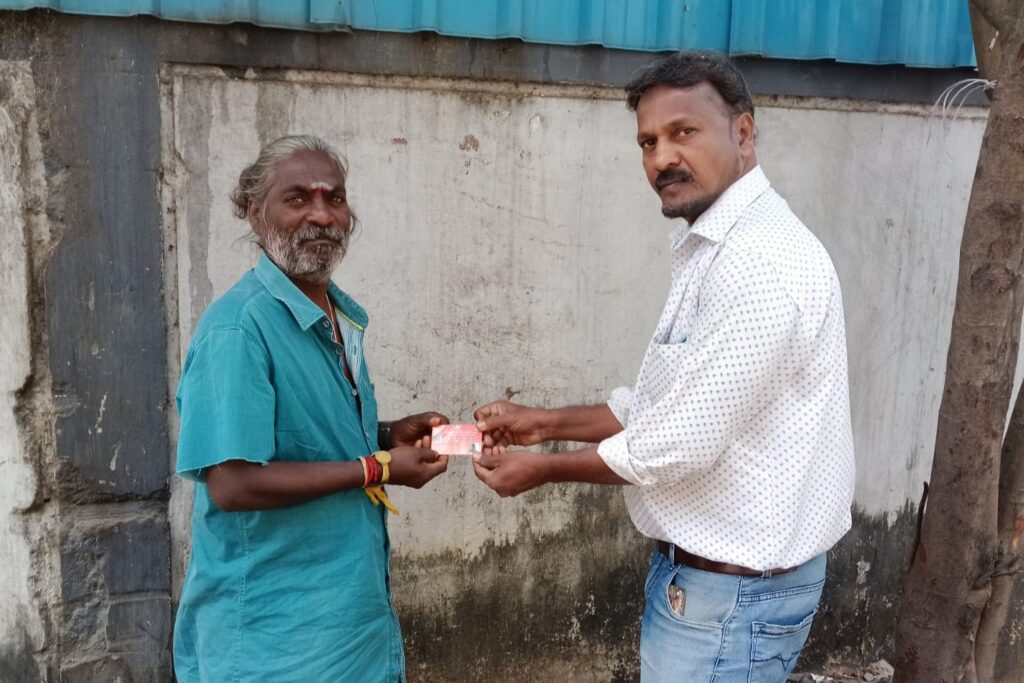
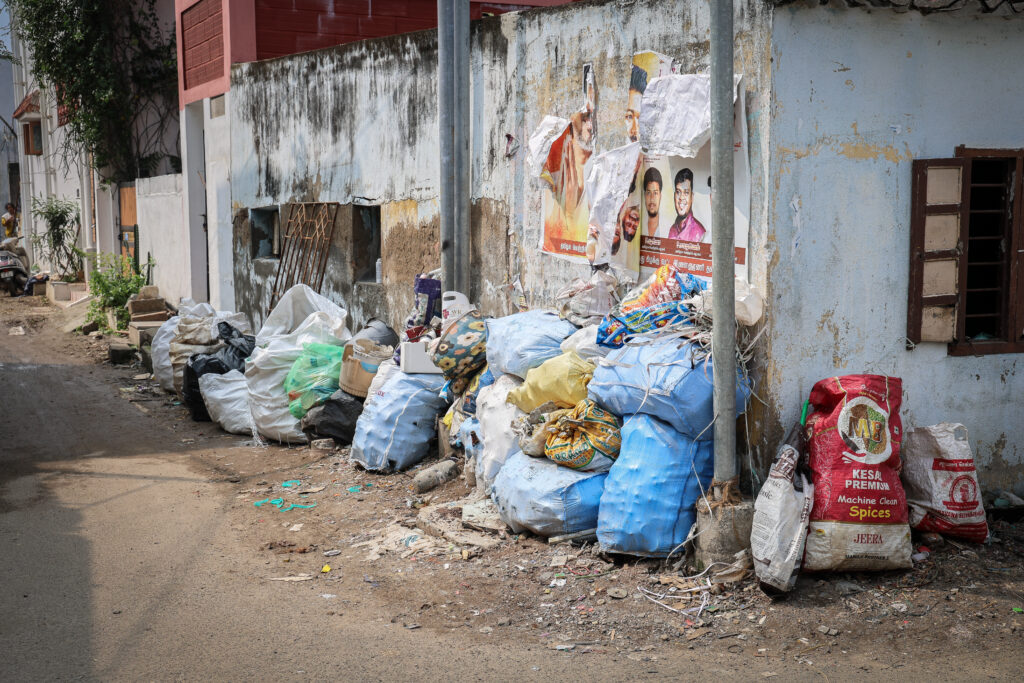
Take a look at the full interview with Ganesan below.
For many families, waste picking has been a generational livelihood, not because it is an easy choice, but because it is often the only available source of income. The FBBB project does not change that reality overnight. However, it aims to strengthen working conditions and provide greater safety and stability for those currently depending on this work.
Through the project, 50 waste pickers are now formally integrated into the value chain connected to the barrier system. As part of this integration, they receive:
- Access to health insurance
- Proper safety equipment
- Structured collaboration within the recycling network
These measures are practical steps towards making essential environmental work safer and more secure.
Importantly, the FBBB project builds on existing local recycling systems rather than replacing them. Waste pickers have long been central actors in Chennai’s informal recycling economy. By strengthening working conditions and linking their work directly to a circular manufacturing system, the project aims to create both environmental and social impact – ensuring that recovered plastic can move onward through the value chain, rather than ending up in waterways and the ocean.
Without the first link, there is no value chain.