


FROM RIVERS
TO OCEANS
Riverguard targets plastic in rivers and waterways before it reaches the ocean.
CIRCULAR VALUE CHAINS
Built to last beyond project funding.
Connecting collection, sorting, recycling and new production to create lasting value from recovered plastic.

THE CHALLENGE
Stopping plastic is only the beginning
Plastic pollution in rivers and waterways is a growing global challenge. Collection systems can prevent plastic waste from reaching the ocean, but keeping these solutions running over time presents another challenge.
Many river clean-up initiatives depend on temporary grants, sponsorships or other external funding. When that funding ends, collection often ends with it, while the flow of plastic continues. At the same time, plastic recovered from waterways is often limited in volume and variable in quality, making it difficult for the recovered material alone to create a viable business case for continued collection.
Riverguard Initiative addresses this gap by looking beyond collection itself. By combining ocean-bound plastic with larger volumes of locally collected land-based plastic, the initiative aims to create the volume and material consistency needed for viable recycling. Connecting these material flows with processing, new production and market demand creates the foundation for circular value chains that can generate value and help support collection systems long after initial project funding ends.
THE RIVERGUARD MODEL
Riverguard combines ocean-bound plastic with larger volumes of locally collected land-based plastic to create a viable and scalable material flow. The land-based plastic provides the volume and more consistent material quality needed for efficient recycling, making it possible to incorporate ocean-bound plastic that would otherwise be more difficult and costly to recycle.
By bringing the two material streams together and connecting them with sorting, processing and new production, the model creates a traceable value chain where recovered plastic becomes a marketable resource and the value generated can help support the continued operation of collection systems.
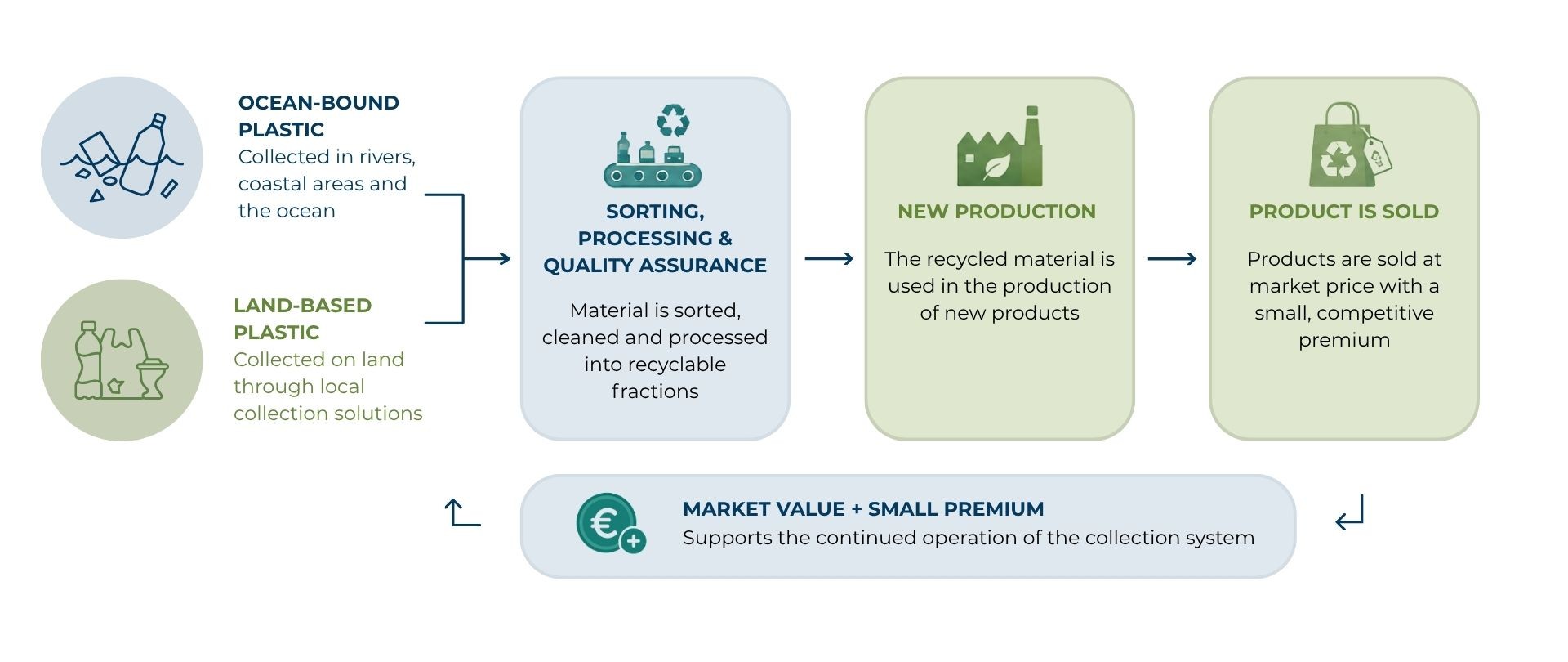
Creating a model that can keep running
Combining the two material streams creates the volume and material quality needed to build a viable business case. By blending ocean-bound plastic with larger volumes of land-based recycled material, recovered ocean plastic can become part of products that meet market requirements while retaining a documented share of ocean-bound material.
Products are sold at market price with a small, competitive premium, with the additional value helping to support the continued operation and maintenance of the collection system.
For end users, this creates an opportunity to source recycled materials with a documented origin while contributing to relevant ESG, EU and other sustainability targets. Products can also be marketed as containing a documented share of certified ocean-bound and land-based recycled plastic.
In this way, the volume from land-based collection helps make the value chain commercially viable, while the value created along the chain can help finance the collection that starts it.
THE RIVERGUARD APPROACH
CIRCULAR VALUE CHAINS
Creating market-ready value from recovered plastic
Riverguard brings together large volumes of post-consumer plastic collected from waterways and on land, connecting collection with sorting, processing, certification and recycling into new products that can compete on market terms in both price and quality.
LOCAL & SOCIAL VALUE
Creating value throughout the supply chain
Riverguard aims to build value chains that not only address plastic pollution, but also contribute to improved social and working conditions for the people and organisations involved in collection, sorting and processing.
LONG-TERM OPERATIONS
Building beyond project funding
Riverguard develops projects around a business model where the continuous market-based sale of recycled products helps create the financial foundation for the ongoing operation of collection systems and the processing of recovered plastic.
Thomas Alstrup
Head of Secretariat, Ocean Plastic Forum
E-mail: ta@oceanplasticforum.dk
Phone: +45 30 29 30 72
Let's build the next Riverguard project


Ocean Plastic Forum
Sankt Annæ Plads 16, 1250 København K
Danmark
CVR: 39860919