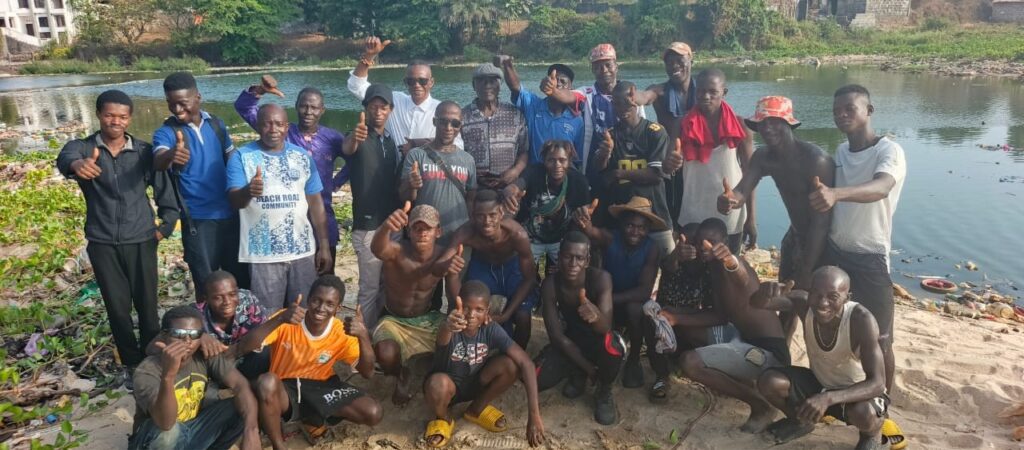
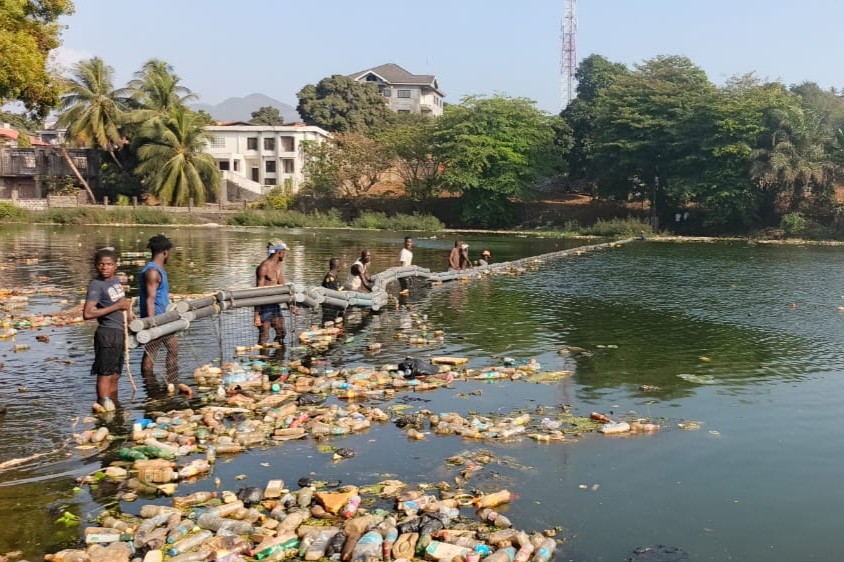
The floating waste barrier, which we in collaboration with local partners and Propel Organization, have been wokring to install over the last few months, has now finally been deployed in Freetown, Sierra Leone.
The project, carried out in partnership with Engineers Without Borders, has from the outset been shaped by complex local conditions, including limited infrastructure, challenging weather conditions and difficult access to the site. Reaching this point is therefor an important milestone, as the barrier is now finally in the water.
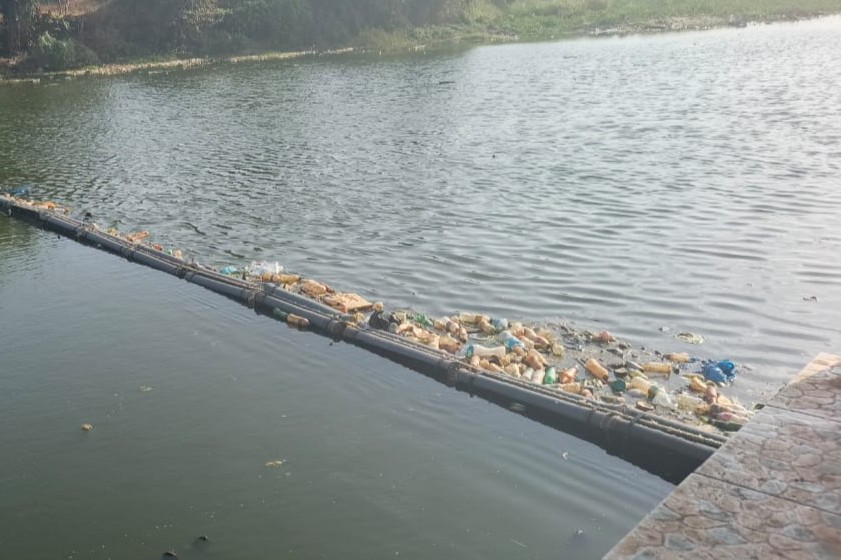
And even more importantly: it has already started working.
The first images from the installation show plastic waste already beginning to accumulate at the barrier. It is still early, but a clear indication that the solution has the potential to make a real difference in the area. At the same time, the installation is only the first step in the next phase of the project.
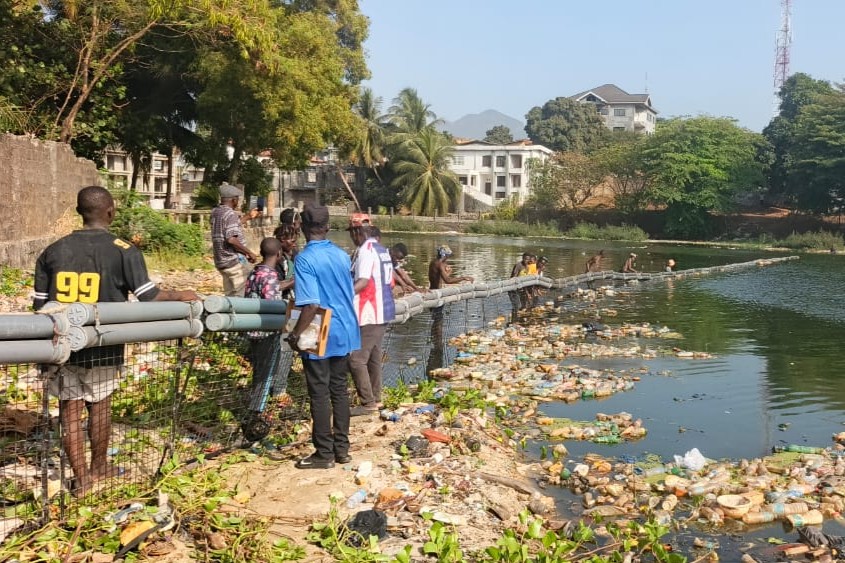
The focus will now be on ensuring the long-term functionality of the barrier and creating a more stable and well-functioning river system. This includes reopening water flow by removing sand build-up, stabilising riverbanks through nature-based solutions such as mangrove planting, and establishing regular maintenance and monitoring routines.
At the same time, the local community plays a central role in the continued efforts. Local teams will be involved in maintenance, clean-up, and monitoring activities, which is essential for ensuring the long-term sustainability of the project. A structured system for ongoing documentation and reporting has also been established, allowing the barrier’s performance to be monitored over time – both in terms of impact and potential challenges.
With the barrier now in operation, the project takes an important step from planning to implementation. The coming months will be crucial in ensuring that the solution not only workds in the short term, but also creates lasting improvements for both the environment and the local community in Freetown.
Thank you so much to everyone involved in the project!